Grant available for insulation?
Find out instantly whether your property may be eligible for an insulation grant.



By choosing roof insulation, you can reduce your energy bills while making your home more comfortable. Your loft will stay much warmer during the winter and noticeably cooler in the summer. We insulate pitched roofs, with the option of installation either with or without an interior finish.
 alt=""/>
Find out instantly whether your property may be eligible for an insulation grant.
Do you have a question or would you like to schedule a free, no-obligation consultation? You can contact us by phone or book an appointment using the consultation button.
Internal roof insulation is a highly effective way to improve the energy efficiency of your home. This involves installing insulation material on the inside of the roof structure, usually in the loft or the room directly beneath the roof. It can be installed either with or without an interior finish. By insulating your roof, you keep warmth inside during the winter and prevent excessive heat from entering during the summer. There are several ways to insulate a roof, and the most suitable solution for your home will be discussed during a free, no-obligation consultation.
Would you prefer to finish your roof yourself, or not have an interior finish at all? No problem. We can install the insulation layer only. This provides the same insulation performance as a fully finished roof insulation system. For roof insulation without an interior finish, we use closed-cell polyurethane spray foam. This insulation material offers excellent thermal performance and, thanks to its seamless application, creates a completely airtight roof without the need for membranes or additional finishing materials. We can also apply a protective coating to the insulation layer. The Pluimers coating is strong, flexible, fire-retardant and provides a durable finish with excellent adhesion.
Many lofts are dark, dusty and uninsulated. At Pluimers, we see this as wasted space because your loft has so much potential. We combine high-quality insulation materials with premium finishing systems, ranging from practical solutions to luxury finishes. This allows you to transform your loft into a comfortable living space where you’ll enjoy spending time. We offer various systems for internal roof insulation, including the Aurora and Horizon finishing systems.
Knauf Naturoll 037 is an insulation product manufactured by Knauf Insulation and made from mineral glass wool. It is primarily used for the thermal and acoustic insulation of pitched roofs, floors and timber-frame constructions. The “037” refers to the product’s thermal conductivity (lambda value). A lambda value of 0.037 W/m·K indicates excellent insulation performance: the lower the lambda value, the better the insulation.
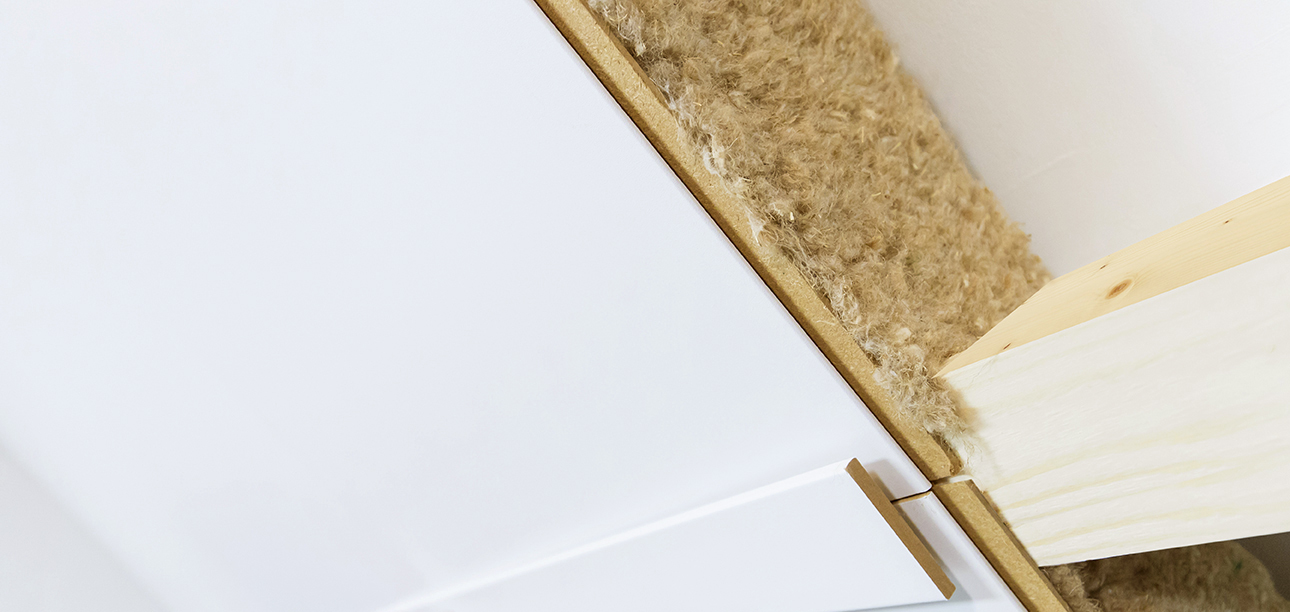
Gramitherm is an insulation material made from grass fibres, often sourced from roadside grass. It is an environmentally friendly, sustainable insulation product used for both thermal and acoustic insulation in homes and commercial buildings. Gramitherm offers a natural alternative to traditional insulation materials such as glass wool and stone wool. With a lambda value of 0.041 W/m·K, it provides insulation performance that is comparable to conventional insulation materials. Because it is a bio-based insulation product, additional grant opportunities may also be available.
Gramitherm is generally supplied in the form of insulation batts that are particularly suitable for roof insulation. It is especially popular in projects where sustainability and environmental performance are key priorities.
Internal roof insulation is generally more affordable than insulating from the outside because it does not require major alterations to the roof structure. This makes it a cost-effective option, particularly for renovation projects or where access to the outside of the roof is limited.
Installation is relatively straightforward and can usually be completed without carrying out extensive work on the exterior of the property. This is particularly beneficial when planning restrictions apply or when the roof covering is still in good condition.
Because the insulation is installed inside the property, the work is less dependent on weather conditions, making it suitable for installation during the winter or in periods of wet weather.
As the external appearance of the roof remains unchanged, internal insulation causes minimal disruption and preserves the building’s appearance. This can be particularly important in densely populated urban areas or where the exterior of the building must remain untouched.
Internal roof insulation creates a more stable temperature in the rooms beneath the roof, making them more comfortable throughout the year. It improves thermal performance during the winter while helping to keep your home cooler during the summer.
For older or listed buildings, altering the exterior of the roof is often not permitted for historical or aesthetic reasons. Internal roof insulation provides an effective solution without affecting the building’s appearance. In some cases, loft floor insulation may also be a suitable alternative.
A wide range of insulation materials can be used for internal roof insulation, including glass wool, stone wool, insulation boards and spray foam. This allows you to choose the solution that best meets the specific requirements of your property, whether your priority is thermal insulation, sound reduction or fire performance.
Although internal roof insulation offers many advantages, there are also a few factors to keep in mind. One of these is the potential loss of internal space. It is therefore important to use the correct insulation materials while ensuring adequate ventilation and the installation of a vapour control layer on the warm side of the insulation. The roof structure itself should also be vapour permeable towards the outside.
A flat roof can certainly be insulated, and doing so is highly recommended to reduce heat loss, improve the energy efficiency of a building and minimise the risk of moisture problems. There are several methods available, depending on the roof construction and your specific requirements. In most cases, flat roofs are insulated from the outside using a warm roof system.
Pluimers does not install flat roof insulation systems. These projects should be carried out by a specialist roofing contractor because the external roof covering, such as bitumen roofing, usually requires repair or replacement during the installation process.
With a warm roof system, the insulation is installed above the roof structure but beneath the waterproof roof covering. This keeps the roof structure on the warm side of the insulation, significantly reducing the risk of condensation.
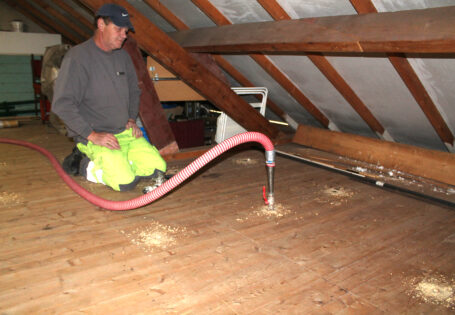
An alternative to insulating the inside of a pitched roof is insulating the loft floor. Installing loft floor insulation can significantly improve the thermal envelope of your home. The smaller the heated living area, the more efficiently your home retains heat, resulting in lower energy consumption and reduced heating costs.
One reason to choose loft floor insulation instead of insulating the pitched roof is when the roof contains asbestos. During a consultation, one of our specialists can assess your loft and advise which insulation solution is most suitable for your property.
Various grants and funding schemes are available to help reduce the cost of roof insulation. These include national government incentives as well as additional schemes offered by some municipalities and regional authorities.
Several mistakes can reduce the effectiveness of roof insulation or even lead to damage to your property. Below are some of the most common issues caused by poor installation:
Roof insulation offers significant benefits, including lower energy bills and a more comfortable home. However, achieving these benefits depends on installing the insulation correctly. Common mistakes such as inadequate ventilation, omitting a vapour control layer or poor workmanship can significantly reduce the effectiveness of the insulation system.
This page was last updated on 20 April 2026. We make every effort to ensure the information on this page is accurate and up to date. If you notice anything that is incorrect, please let us know. No rights can be derived from the content of this page.
Request your free consultation and quote today!
Call us directly or request your free quote online using the "free quote" button.
Our insulation advisor will be happy to visit you for a free, no-obligation consultation.
Yes, I'd like a free consultation!