pluimers.nl

Stappen spouwmuurisolatie verwijderen

In deze video leggen wij u de stappen uit van spouwmuurisolatie verwijderen:

Request a free, no-obligation consultation

Do you have a question or would you like to schedule a free, no-obligation consultation? You can contact us by phone or book an appointment using the consultation button.

Removing old insulation

Removing old insulation is sometimes necessary to resolve moisture problems, deteriorated insulation or reduced thermal performance. We specialise in the careful removal of outdated cavity wall insulation and replace it with modern, high-performance insulation materials. This ensures your home remains well insulated, energy efficient and ready for the future.

Why remove cavity wall insulation?

Over time, insulation materials can lose their effectiveness for a variety of reasons:

  • Outdated insulation – Materials such as urea-formaldehyde (UF) foam, older mineral wool or EPS beads can become brittle, crumble or settle over time, creating thermal bridges.
  • Moisture problems inside the cavity – Older insulation materials that were not moisture resistant can absorb water, leading to damp, mould growth and increased energy consumption.
  • Poor installation or damage – During the 1970s and 1980s, insulation techniques were not always installed to today’s standards, resulting in lower insulation performance.
  • The need for better insulation – Modern insulation materials offer significantly better thermal performance and moisture resistance. Removing the old insulation allows it to be replaced with a much more efficient solution.

How is cavity wall insulation removed?

Removing cavity wall insulation is not a DIY job. It requires specialist equipment and expertise to prevent damage to the façade and to ensure the insulation can be replaced correctly. We also inspect the cavity for any structural issues that should be addressed before new insulation is installed. Our removal process consists of the following steps:

  1. Inspection of the cavity wall
    Our specialists determine which insulation material has been installed and assess its condition using an endoscope.
  2. Removing the insulation material
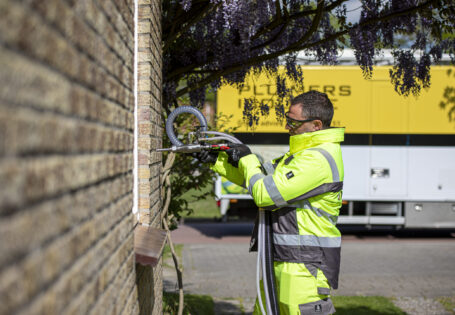
    Loose materials such as UF foam, mineral wool fibres or EPS beads are generally removed using a powerful extraction system. Small openings are created in the mortar joints to extract the insulation. Bricks are temporarily removed at the base of the wall to create negative pressure, allowing the insulation to be safely extracted from the cavity. This method is only suitable for injected insulation materials and not for rigid insulation boards installed during construction.
  3. Resolving moisture issues
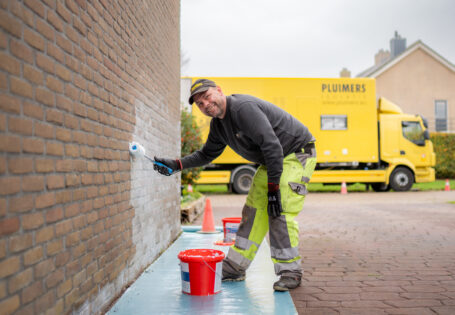
    Any existing moisture problems are addressed before new insulation is installed, for example by repairing damaged mortar joints or treating the external wall against moisture penetration.
  4. Cleaning the cavity
    The cavity is thoroughly cleaned to remove all remaining insulation material and debris.
  5. Installing new insulation
    Once the cavity is dry, clean and suitable for insulation, new insulation can be installed. Suitable materials include polyurethane foam, treated stone wool or treated glass wool.

In most cases, cavity wall insulation can be removed within a single day. The exact duration depends on the insulation material and the size of the cavity wall.

When should cavity wall insulation be removed?

Old insulation does not always need replacing immediately, but in certain situations removal is recommended to prevent problems or improve your home’s energy performance. Common signs include:

  • Moisture problems: Damp walls or visible mould growth.
  • Draughts and heat loss: If your home struggles to retain heat, deteriorated insulation may be the cause.
  • Loose or escaping EPS beads: This indicates that the insulation has deteriorated and is no longer performing properly.
  • Renovation work: During façade renovations or new insulation projects, existing insulation often needs to be removed first.

What does cavity wall insulation removal cost?

The cost of removing cavity wall insulation depends on several factors, including the type of insulation material and the size of the cavity wall. Finding the right balance between cost and long-term benefits is important.

The final price depends on factors such as:

  • The type of insulation material (glass wool, polyurethane foam, EPS beads, etc.).
  • The size of the cavity wall and its accessibility.
  • Any additional work required, such as moisture treatment or repointing damaged brickwork.

Would you like an estimate? Contact us for a free inspection and personalised advice.

More services from Pluimers Insulation

Request your free consultation and quote today!

Call us directly or request your free quote online using the "free quote" button.

Free insulation advice?

Our insulation advisor will be happy to visit you for a free, no-obligation consultation.

Yes, I'd like a free consultation!